

Litecoin’s 2019 Halving Rally Was Predicted by Google Searches
Last Updated on: November 22, 2026In June 2019, Litecoin was the best-performing major coin on the market and the halving was two months away.
Search interest had spiked alongside the price, and a small corner of crypto
Twitter was using Google Trends to call the top… it worked.
LTC peaked that month near $145, halved in August, and was under $45 by December.
Here’s what the theory said, and why it stopped working.
The Halving Setup
Litecoin spent May and June 2019 climbing hard… some investors saw returns of up to 600% from the spring lows before the correction, and the coin led the market rather than following bitcoin.
That kind of run pulls in attention.
People started searching for Litecoin, and Google Trends… a tool for measuring how often a term is searched relative to its own history… registered the spike.
Analysts read the data as confirmation that the pre-halving surge had room left.
The Feedback Loop
The theory was mechanical… price rises, which brings the coin to more people… those people search for it… the search interest feeds more buying.
The cycle repeats until the halving arrives, at which point attention collapses, holders take profit, and the price falls back from its artificial height.
It’s a retail attention model, not a valuation one… it says nothing about what Litecoin is worth and everything about how long a crowd stays interested.
The sequence matters, because the article this piece is based on argued both that the rally would continue and that a 70% crash was coming, without reconciling them.
There’s no contradiction once you order it correctly: the top comes *before* the halving, not at it… the event is the sell signal, not the buy signal.
Halving Mechanics
A halving cuts the block reward in half on a pre-determined schedule… years apart.
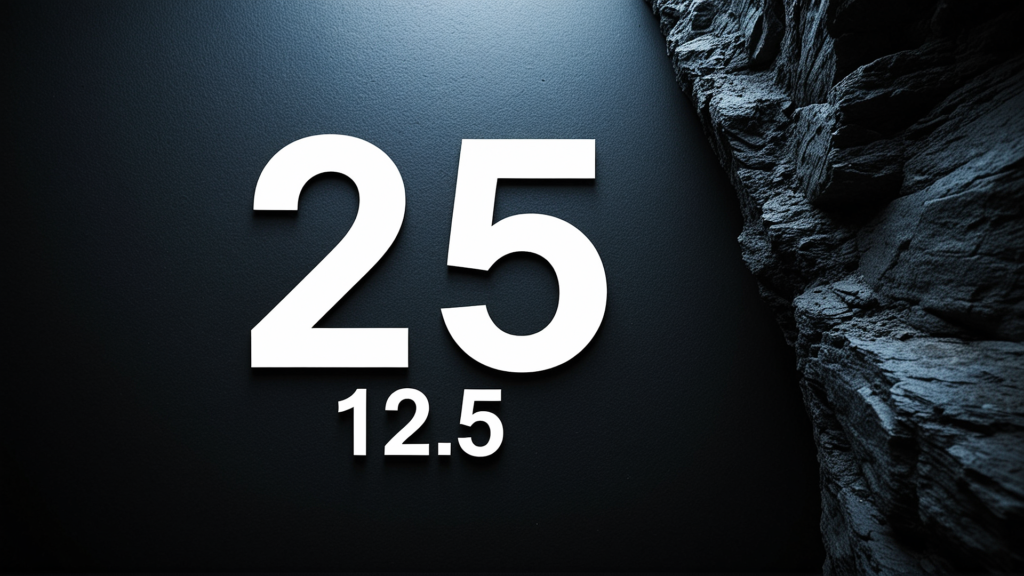
Litecoin’s reward was 25 LTC per block… in August 2019 it dropped to 12.5.
The bull case at the time was scarcity… less new supply hitting the market each day, so the same demand pushes price higher.
That framing… stock-to-flow and its descendants… was dominant in 2019 and it’s why halvings were treated as scheduled rallies rather than scheduled supply changes.
The caveat the article did include, briefly, is the one that matters… past performance is not an indicator of future activity… a sample of one prior halving is not a pattern.
What Actually Happened
Litecoin peaked around $145 in late June 2019… the halving came on August 5… by December the price was under $45… a decline of roughly 70% from the top, matching the more bearish predictions almost exactly.
The search-interest theory called the top… not approximately… not in hindsight with a wide margin… it flagged the moment retail attention peaked, and attention peaked with the price.
Why It Doesn’t Work Now
Google Trends was a reasonable proxy for retail interest in 2019 because search was where curious newcomers went… that’s no longer true.
Attention is split across X, TikTok, Telegram, prediction markets, and AI… there are a lot of it never touches a search bar.
Litecoin also halved again in August 2023, and the pattern was much weaker.
The price barely moved into the event and drifted afterward.
Some of that is a colder market, but some of it is that the 2019 result depended on a broad bull run doing half the work.
The Tool Was Right Once
The 2019 call deserves credit… it was specific, it was public, and it landed.
But it landed in a particular market with a particular attention structure, and the people who made it were reading a signal that has since been diluted.
What survives is the underlying idea: retail attention is a leading indicator of retail-driven tops, and it can be measured.
What doesn’t survive is the shortcut… Google alone, in 2026, is an incomplete instrument.
Watch where the crowd actually is, not where it used to be.