


No matter what you are doing online, you must be sure that you are safe and that your Personal Identifying Information (PII) is secure.
To help you make that a part of your everyday life, I continue to stack this important information in a way that allows you to implement it in stages or layers to increase your online protection.
So, if you have not already read our previous online privacy/online security info, here are the links so you can go back and get informed: Online Security 101, Data Breaches Put your Personal Info At Risk, Your Options Once Personal Data Is Compromised, Credit Monitoring & ID Theft Protection, Data Brokers – Who Is Collecting Your Data & Why, Think Online Security With Your Cell Phone, Security Keys – The Future of Online Security, Protecting Your PC and Importance of Strong Passwords.
What is a VPN & Why Do You Need One?
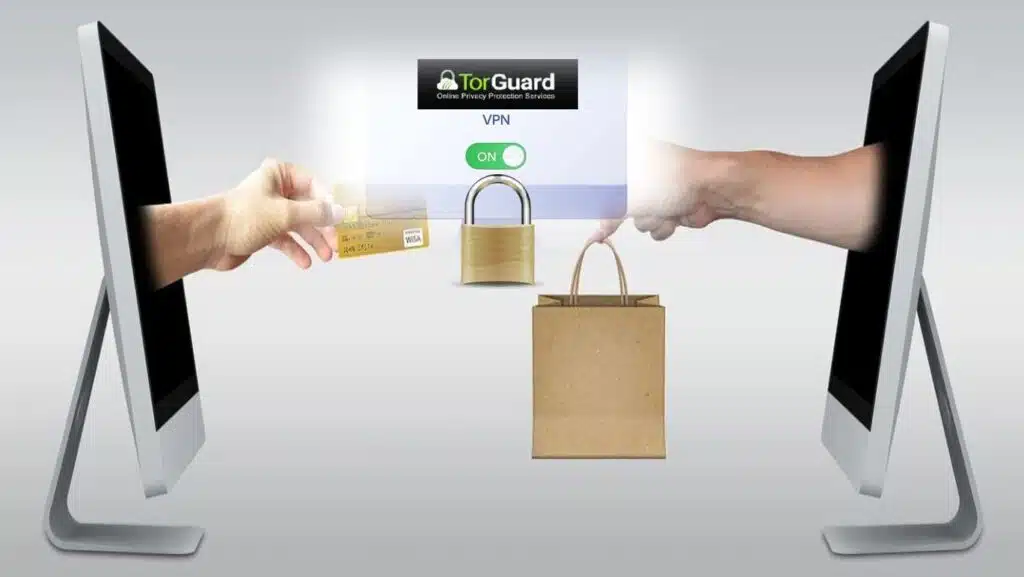
A VPN, or Virtual Private Network, is a way to add a critical layer of security and privacy to your device when you use the internet.
It does this by encrypting all of your internet traffic and routing it through a secure server, which hides your real IP address and location from the websites you visit.
Think of it like driving your computer through an online tunnel that only you and your destination can see inside & travel through…
In 2026, having a VPN is more important than ever.
Your Internet Service Provider (ISP) can see and sell your browsing data, and they may even throttle (slow down) your connection based on your activity.
A VPN helps to prevent this by making your activity invisible to your ISP, ensuring both privacy and consistent speeds.
How It Works
Let’s break down how this all works in simple terms…
Imagine your home network… all your devices connect to the internet through one router.
A VPN emulates this secure private network without the devices needing to be in the same place.
First, you download the VPN software to your device… once activated, this software creates a secure, encrypted connection (a “tunnel”) to a server run by the VPN company.
All of your web traffic now travels through this tunnel… both the data you send out & the data you receive are encrypted… so anyone “listening in” on the network… whether at a public café or your own ISP… noone has access to your web traffic data.
Understanding VPN Protocols
So, that seems simple enough… right?
But here’s the thing… not all VPNs are created equal.
The “how” of the encryption is determined by its VPN protocol.
This is the set of rules that governs how your data is encrypted and transmitted… older protocols like PPTP are outdated and insecure.
For years, OpenVPN was the gold standard… however, today, the modern standard is WireGuard®, a protocol known for being significantly faster, more secure, and simpler than its predecessors.
When choosing a VPN service, look for one that offers WireGuard to ensure you’re getting the best performance and security.

When I need to use a more traditional VPN service… I use and recommend Torguard & Proton VPN.
Each of these are slightly different service providers… both do not keep any logs & you can pay for your service with crypto… this is a great option to provide an additional layer of anonymity.
Decentralized VPN (DPN) Alternative
But the evolution in VPN services continues…
A new evolution in this space is the Decentralized VPN (DPN).
Unlike a traditional VPN, which relies on centralized servers owned by a single company, a DPN routes your traffic through a decentralized network of nodes run by users around the world.
This eliminates the single point of failure and the risk of a company logging or selling your data.
A DPN is essentially a serverless VPN, offering a new level of trust and privacy.
I use and recommend Deeper Network.

They offer hardware devices that create a DPN for your entire home network, often with no subscription fees… and in many situations, you can actually earn some crypto in the process.
VPNs & Cryptocurrency
As I’ve been laying out this online security series, I’ve been careful to include why security is important… especially for cryptocurrency…
The bottom line is… for anyone involved in crypto, a VPN is an essential tool.
It provides a critical layer of operational security (opsec).
By using a VPN, you prevent your IP address from being linked to your activity on centralized exchanges, wallet software, or blockchain explorers… this makes it much harder for malicious actors to target you.
Furthermore, a VPN allows you to access decentralized applications (dApps) or crypto services that may be geo-restricted in your region… ensuring you have unrestricted and private access to the entire Web3 ecosystem.
Choosing a Service: No-Logs
When you finally decide to get a VPN… you’ll find there is no shortage of providers out there…
But remember, as the old saying goes… you get what you pay for…
When choosing a VPN or DPN, the single most important feature to look for is a verified, audited no-logs policy.
This means the provider has a proven track record of not recording or storing any of your browsing activity, connection timestamps, or IP addresses.
A simple “no-logs” claim on a website is not enough… it needs to be independently audited by a reputable third-party firm to be trustworthy.
This is your only guarantee that the service isn’t tracking you.
Potential Drawbacks & Avoiding Them
While VPNs are powerful tools, there are potential drawbacks if you choose the wrong service.
A common issue is a decrease in internet speed due to the encryption process… though modern protocols like WireGuard have minimized this.
The biggest risk comes from “free” VPNs…
As the saying goes… if you are not paying for the product, you ARE the product.
Many free VPNs track and sell your data… thus defeating the entire purpose.
Not to mention, some low-quality VPNs can “leak” your real IP address or DNS requests… ultimately compromising your privacy.
This is why choosing a reputable, audited provider is a must.
Your Privacy Mandate
In an era of constant data collection and surveillance… a VPN or DPN is no longer a niche tool… it’s a fundamental layer of your digital defense.
It protects your privacy from your ISP, prevents throttling, and secures your activity on any network, especially public Wi-Fi.
For crypto users, it’s a non-negotiable part of operational security.
If you are on the hunt for a VPN service, you can find my latest recommendation for these services, as well as all my security tools on the My Toolbox Page.
By choosing a reputable service with a verified no-logs policy and a modern protocol, you can take back control of your online privacy.

