U.S.-Iran Conflict | A Stress Test For The Gulf’s Crypto Hub
For years, the United Arab Emirates and its neighbors have meticulously built a reputation as the world’s most welcoming, and forward-thinking hub for anything cryptocurrency.
They’ve done this by creating clear crypto regulations, low crypto taxes… and major industry presence.
Up to now, the Gulf region has become a core market for digital assets… a place where exchanges can build headquarters, and cryptocurrency innovation is encouraged to flourish.
But, this region of innovation is taking part, mostly unwillingly, in a real-time stress test.
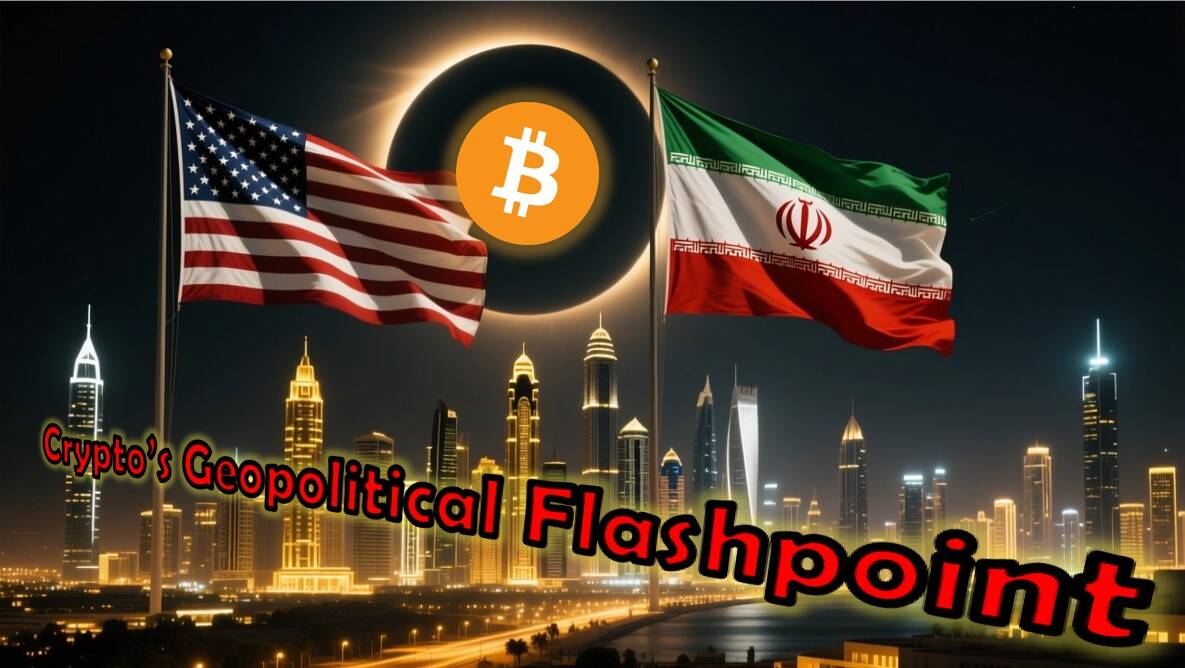
As tensions escalate between the U.S. and Iran, and the growing conflict sends missiles streaking across the skies in the Gulf, the question becomes: will this burgeoning crypto paradise be able to survive the kinetic activities going on all around the region?
The Cost of Conflict
The first ripples of the conflict were felt not on price charts… they were seen in corporate Slack channels and internal memos.
As the reality of the conflict set in, major exchanges with a significant footprint in the region, including Binance, Bybit, Bitget, and OKX, activated contingency plans… honestly, I was a bit surprised that these exchanges had a “war” contingency plan.
These plans weren’t theoretical exercises… they were urgent, operational directives.
These exchanges circulated shelter-in-place orders, and outlined emergency relocation procedures for thousands of employees in the UAE, and nearby states.
Bitget’s CEO, Gracy Chen, publicly detailed their commitment to staff safety. Chen promised employees full pay regardless of disruption, as well as covering costs for temporary accommodations, transportation, and medical supplies.
Binance issued internal safety alerts to its staff as well. These alerts urged its UAE-based team to follow government directives and remain in secure locations.
The rapid responses by these exchanges shows that they understand that while they operate in the decentralized, and borderless world of crypto, they remain rooted in the physical world… a region of that world which is now under threat.
Potential Talent Drain
But the effects of this conflict could potentially be felt over a longer term… and with potentially devastating repercussions.
At the end of the day, the contingency plans for employee relocation are a short-term fix… but a protracted period of instability could trigger a significant brain drain for the area.
Talented individuals have options.. and as such, many of these individuals may choose to relocate to more stable crypto hubs (like Singapore, Switzerland, or even returning to the US/Europe).
This type of “flight to safety” would hollow out the crypto ecosystem in this region… from the inside… making this drain an equally devastating threat.
Tale of Two Markets
However, this conflict doesn’t just affect the cryptocurrency market, and its infrastructure… traditional markets are also feeling the stress.
The region, and the world, saw traditional financial infrastructure screech to a halt. This helped to further highlight the differences between crypto and blockchain against the TradFi system.
The Abu Dhabi Securities Exchange (ADX) and Dubai Financial Market (DFM) remained closed, and large international banks suspended non-essential travel to the region.
Meanwhile, crypto did what it does best… stayed online.
Trading on Bitcoin, Ethereum and other cryptos continued uninterrupted.
Though the crypto markets experienced an initial price shock when the conflict began, which caused a temporary dip, they quickly bounced back, and activity boomed in alternative assets.
With traditional commodity markets closed, traders flocked to tokenized instruments like Tether Gold (XAUt) and Pax Gold (PAXG) to hedge against uncertainty.
Crypto Case Study
The one certainty, I would hope we ALL hold, is that no one wants war.
As we’ve already seen, this conflict exposes the vulnerability of centralized hubs, and it also powerfully validates the core ethos of crypto.
While none of us can control the actions of the actors in this conflict, we can observe, and use these events as a means of gathering information, and testing hypotheses.
So, let’s examine the fact that trading continued, that tokenized gold was accessible when traditional markets were closed… and that value could be moved without relying on a single, centralized financial system… is a monumental proof-of-concept for the crypto space.
Because it appears that crypto has shown a unique resilience… in the long run… this could potentially strengthen the argument for a truly decentralized, distributed infrastructure that isn’t reliant on any single geographic region.
Regulatory Response To Uncertainty
As we all know, governments aren’t always the most consistent of creatures, especially when their control on a situation is threatened.
With that in mind, how might the UAE’s regulators react under sustained pressure?
Could crypto become a lower priority, or even a perceived risk, as the government focuses on national security?
Let’s not forget, there’s also the risk of capital controls being implemented in a crisis. These would obviously be antithetical to the open financial principles crypto embodies.
As you can see, this potentially adds another layer of uncertainty for businesses operating there.
Fragile Infrastructure In The Region
This conflict affects more than just exchanges when it comes to crypto… the conflict threatens the very physical, and digital infrastructure that underpins the region’s crypto ecosystem.
In a recent Matrix Money Podcast episode, CryptoJar and CryptoCoinMindSet pointed out this very fragility.
They discussed Iran’s history as a major Bitcoin mining hub, a status that was fueled by its subsidized energy.
Beyond this industrial scale mining, cryptocurrency has also become a crucial tool for ordinary Iranians to bypass sanctions, and preserve their savings.
But more than that, since the conflict began, crypto has been how these everyday Iranians, and others in the region, are moving money, and paying for their everyday needs.
So ultimately, a prolonged conflict directly impacts both a national industry and individual financial sovereignty.
While recent crackdowns due to energy grid strain have curtailed Iran’s mining operations, the nation’s Bitcoin mining potential remains a significant piece of the regional landscape.
Any protracted conflict or escalation, could cripple what remains of this industry, impact global hash rate distribution, and crush the very people crypto can help.
Furthermore, the Gulf is more than just a home for exchanges… it’s a critical nexus for global data and hosting.

As mentioned in the stream, the concerns about infrastructure vulnerability are palpable.
This was felt in real-time after the strike that was reported on an AWS facility. A single missile strike could have catastrophic consequences for countless crypto projects, DeFi protocols, and Web3 applications that rely on that cloud infrastructure.
This vulnerability highlights the growing importance of Decentralized Physical Infrastructure Networks, aka DePIN.
In short, these networks aim to create resilient, distributed alternatives for data storage, connectivity, and more… all of which are immune to single points of geopolitical failure.
If you’re looking to learn more about DePin projects, you can check out CryptoJar’s channel.
But beyond that, let’s not forget the Strait of Hormuz… this waterway is a vital chokepoint for global oil shipments, and is also a corridor for undersea data cables.
Economic Ripple Effects Beyond Oil
This waterway adds yet another consideration to the potential economic effects of a protracted conflict… one that severely disrupts the flow of oil… any disruption would have a massive inflationary impact on the global economy.
This would likely force central banks, including the U.S. Federal Reserve, to react aggressively.
This kind of macroeconomic turmoil typically leads to a “risk-off” event. This is where investors flee speculative assets like cryptocurrency, for the safety of cash or U.S. Treasury bonds.
If this scenario were to play out, the Gulf’s crypto hub would be hit by a double blow… the physical danger of the conflict… and… a global market downturn that starves the ecosystem of capital and investment.
The threat to this physical and economic infrastructure is a direct threat to the digital economy the region has worked so hard to build.
Watch the entire Matrix Money Podcast episode that lays all this out here:
The Future of the Gulf as a Crypto Haven
The overarching theme that is emerging from this crisis is a question of long-term viability.
Can a region actively court the global, decentralized, and often anti-establishment crypto industry while simultaneously being located in one of the world’s most volatile geopolitical flashpoints?
The UAE’s success, at least as it relates to crypto, has been built on a foundation of stability and predictability. This current conflict directly undermines this core selling proposition.
If the conflict becomes protracted, the potential for a “death spiral” for the region’s crypto ambitions, as feared on the live stream, becomes a real possibility.
Talent may relocate… projects may delay launches, or even just move elsewhere… and the promise of a stable, crypto-friendly oasis could be replaced by the reality of a war zone.
The next six months, and the eventual recovery period, will be critical.
The industry is watching closely to see if the foundational strengths of the UAE and its neighbors can withstand this immense pressure.
For now, the conflict serves as a stark reminder that even in the digital age, geography and geopolitics, remain the ultimate arbiters of risk and opportunity.
Disclaimer
The information provided here is for INFORMATIONAL & EDUCATIONAL PURPOSES ONLY!
View our complete disclaimer on our Disclaimer Page