Paxos’ SEC Approval: A Win for TradFi, A Loss for Crypto
Last updated on June 12th, 2026 at 11:24 am
It’s been a hallmark of the Trump administration to blur the lines between the old world of finance and the new frontier of blockchain.
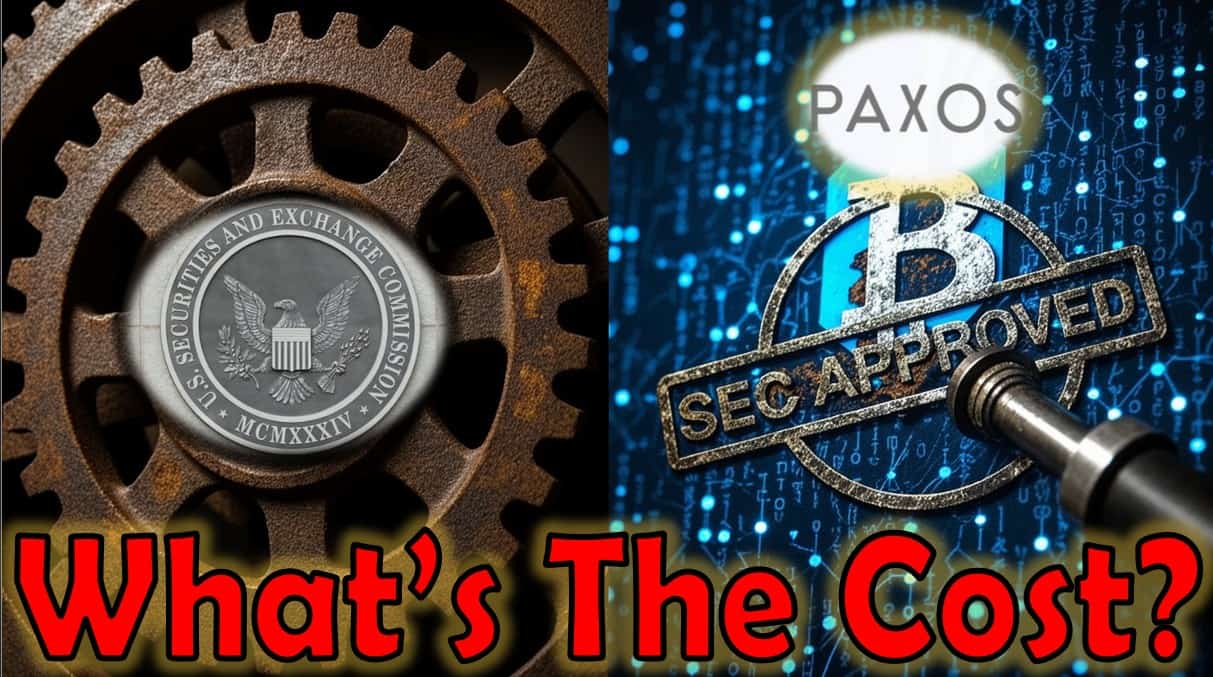
That blurring of lines continues with a landmark move by the U.S. Securities and Exchange Commission. The SEC has officially registered Paxos as a clearing agency.
This designation makes Paxos the first blockchain-native firm to operate at the core of Wall Street’s market infrastructure.
Since President Trump has taken office, it has been clear that his administration is attempting to perform an entire replumbing of the financial system and how it operates.
But as the machine is being force fed this new technology… what does the future of both systems ultimately look like?
What Paxos Actually Won
So, what does this actually mean for Paxos?
For years, the world of securities settlement has been dominated by a single entity… the Depository Trust & Clearing Corporation (DTCC).
It’s the trusted intermediary that ensures when you sell a stock, the money actually changes hands.
Now, Paxos has been given the official keys to join this exclusive club.
According to the SEC’s own order, Paxos Trust Company can now act as a central securities depository and provide settlement and clearing services.
This means they can legally manage the “book-entry” system for “eligible securities” and ensure trades are finalized efficiently.
This isn’t a pilot program… it’s a full-on registration that puts a blockchain firm on equal footing with the legacy system.
One SEC commissioner publicly praised this move as a “step forward for market innovation and efficiency.”
This is one of a number of changes with the SEC, and it’s commissioners of late.
The changing dynamic of the SEC continues with crypto staunchest advocate, Hester Peirce, announcing her retirement from the agency.
These moves raise many questions… including why…
The Question: “Why Now?”
Moves like this… moves that affect the core of the traditional finance system (TradFi), don’t happen in a vacuum.
The official Paxos press release is full of corporate speak about efficiency and modernization.
But what’s the real reason?
As has become apparent over recent years… the TradFi system is facing an urgent need to upgrade.
The current T+2 settlement cycle… where it takes two days for a trade to fully settle… is slow, expensive, and holds trillions in systemic risk.
As analysis from Forbes highlights, a blockchain can settle a trade in minutes.
By granting this approval, the SEC is essentially letting a new, faster, cheaper technology into the racetrack before the old one breaks down.
Let’s be clear… they’re not doing this because they suddenly love crypto… they’re doing it because they fear the consequences of a failing legacy system and the trillions in operational costs and risk it represents.
What This Means for Decentralization
So, is this a victory?
Well, on one hand, it’s a monumental validation of blockchain technology’s superiority. It proves the code is more robust and efficient.
But here’s the catch… Paxos had to play the game to get here.
They had to become a regulated, trust-based entity… a New York-chartered trust company that answers to the SEC.
This is the Trojan Horse of compliance… they get the benefits of the technology, but they have to operate within the system’s rules… its oversight… and its choke points.
This moves Paxos beyond just stablecoins and into the core market infrastructure… making them a direct competitor to the DTCC… but on the system’s terms.
It’s the difference between being your own bank… and becoming a branch manager for the central bank.
Think of it as the cost of doing business in the TradFi system…
Paxos’s Rocky Road to Regulatory Favor
While its new SEC approval paints a picture of a compliant, trusted leader… Paxos’s path to this point has been anything but smooth.
The company’s history is marred by significant regulatory missteps and operational blunders.
The most significant issues stemmed from its partnership with Binance to issue the BUSD stablecoin.
In 2025, the New York Department of Financial Services (NYDFS) hit Paxos with a staggering penalty for what it called “systemic failures” in its anti-money laundering and compliance programs.
The investigation revealed Paxos failed to conduct proper due diligence on Binance and lacked adequate controls to monitor for illicit activity, failing to escalate major red flags to senior management.
Beyond their regulatory battles, in 2025, Paxos accidentally minted $300 trillion worth of PayPal’s PYUSD stablecoin due to an internal error… a mistake that was thankfully corrected before it could wreak havoc on the market but exposed a critical single point of failure in its processes.
Paxos claims that these issues are now “fully remediated,” and have obviously not prevented them from joining the regulatory ranks.
The Ripple Effect
Even though Paxos has basically had to “bend the knee” to the TradFi system to be a part of it… what, if anything, does this mean for crypto?
This move by Paxos and the SEC has just potentially fired the starting gun on a new arms race.
This landmark approval could now pave the way for other blockchain firms to scramble and get their own clearing agency licenses.
This means that the established giants like the DTCC will be forced to accelerate their own blockchain initiatives to avoid becoming obsolete… it’s about who will control the very infrastructure of finance in the 21st century.
This move by Paxos to comply with the rules of TradFi is definitely not in keeping with the ethos of the cryptocurrency space… what will this new infrastructure mean for freedom?
Fork in the Crypto Road: Embrace TradFi or Remain Sovereign?
Does this move by Paxos to “integrate with TradFi” signal a shift by the entire crypto space?
Afterall, approval by the SEC provides a stamp of legitimacy… it opens the floodgates to institutional capital… and provides a clear… albeit costly, regulatory framework to operate within.
With all of this potential capital and acceptance, can crypto companies maintain their foundational principles?
Remaining on the “Sovereign Frontier” path provides immense benefits… true user self-custody… censorship resistance… and the ability to build a parallel financial system that isn’t beholden to the gatekeepers.
But the drawbacks are just as real.
At least for the foreseeable future, you live in a permanent gray area… constantly at risk of enforcement actions.
You’re cut off from the firehose of institutional capital and mainstream adoption, and you have to fight an uphill battle for trust in a space filled with scams and uncertainty.
This Paxos approval has just made that fork in the road much starker for everyone.
Listen to CryptoJar & CCM discuss this and more live on Matrix Money
The Future Is Being Built Now
Paxos winning SEC approval is a historic moment that signals the institutional adoption of blockchain is no longer a question of “if” but “how.”
It proves the technology is ready to replace the creaking, risky infrastructure of old Wall Street.
But we must be clear-eyed about what this represents.
This is the system co-opting the revolution, embracing the efficiency of blockchain while stripping away its core ethos of decentralization.
The gate has been opened, but it’s being guarded by the same old gatekeepers.
Disclaimer
The information provided here is for INFORMATIONAL & EDUCATIONAL PURPOSES ONLY!
View our complete disclaimer on our Disclaimer Page