
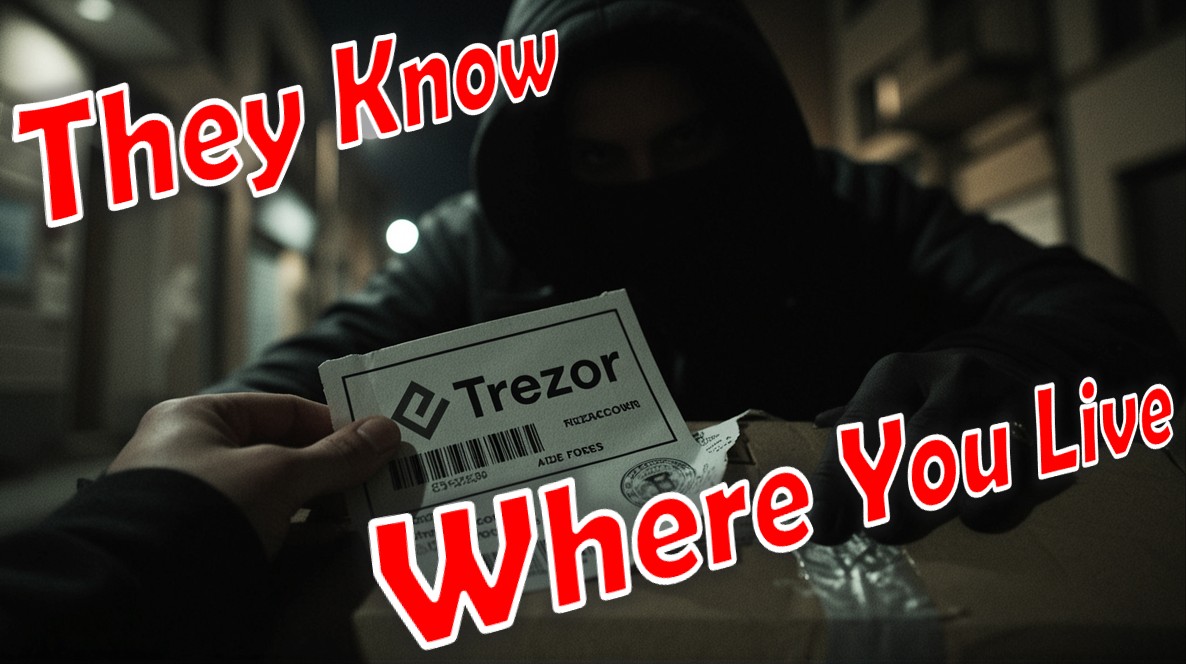
Trezor Data Breach Puts Crypto Holders in Physical Danger
Last updated on September 26th, 2026 at 07:54 am
You buy a hardware wallet to be safe… to take control… to be anonymous…
But what if the very company you trusted to protect your identity was the one that sold you out?
That’s the nightmare Trezor users are facing right now.
A breach at their shipping provider, ShipMonk, wasn’t just a leak… it was a catastrophic failure that exposed the personal data of over 81,000 customers.
And the worst part?
It could have been prevented.
Bigger Breach Than We Thought
One thing’s for certain… there has been no shortage of breaches & hacks throughout the crypto space…
No one is immune… protocol bridges… blockchains… exchanges… and yes, even wallets…
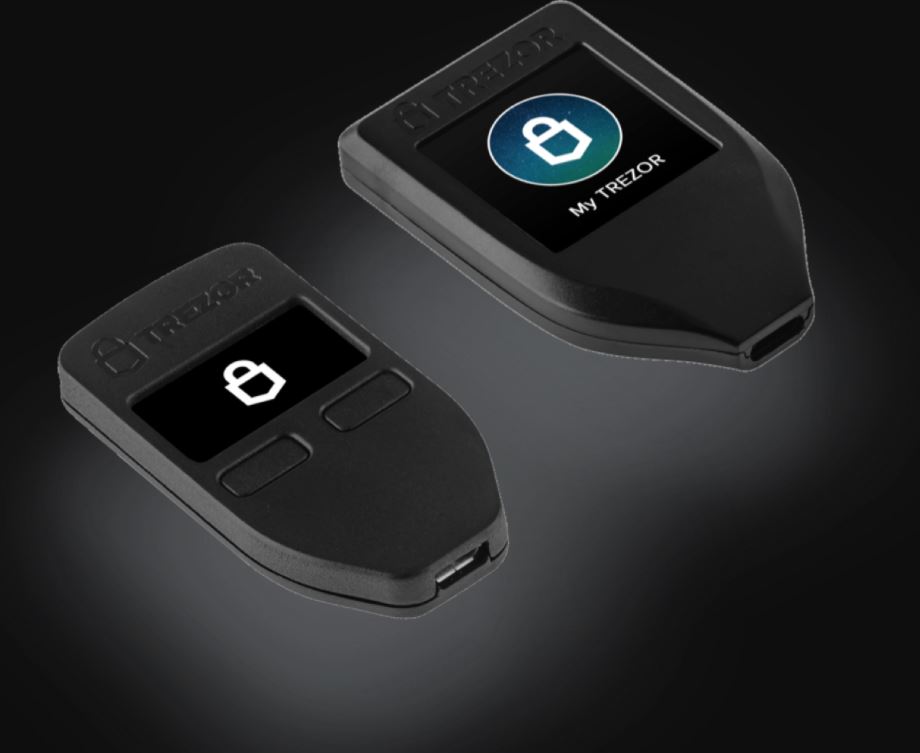
For Trezor, it all started with an announcement on August 13.
Trezor disclosed that a breach at its shipping provider, ShipMonk, had exposed the data of nearly 14,000 customers.
Customer names, emails, phone numbers, addresses… all gone.
But that was just the first chapter… on September 4, Trezor issued a second, more chilling disclosure… an additional 67,000 U.S. customers were also impacted, with data exposed from orders fulfilled between November 2019 and August 2021.
Do I really have to ask the question out loud?
Why are they holding shipping data that is between 5-7 years old?
At the end of the day, the total number of exposed lives skyrocketed to over 81,000.
Zero-Day Vulnerability
This wasn’t some sophisticated attack on Trezor’s vault…
The root cause was a critical zero-day vulnerability in a third-party analytics platform called Metabase, which ShipMonk used.
The flaw, tracked as CVE-2026-72898, is a nasty SQL injection vulnerability with a CVSS score of 10.0.
I get it… that all sounds like a foreign language, right?
Let me try to break it down…
Think of ShipMonk’s system like a high-security office building.
It has a front desk where you’re supposed to show your ID and say who you’re there to see… that’s the normal way in.
A zero-day vulnerability is like discovering a secret, unmarked door in the back that’s been left wide open.
The hackers found that secret door.
They didn’t need to steal an ID or trick anyone… they just walked right in.
Once inside, they found the master key… the administrator login… and had full access to every file cabinet, every office, and every piece of paper in the building.
They didn’t have to break the locks… the lock on the back door was never built in the first place.
So, the ShinyHunters extortion gang exploited this flaw to gain full administrator access to ShipMonk’s systems and just… take the data.
Simple… Devastating.
The Broken Promise
Here’s where it gets infuriating.
Trezor claims it had a contract with ShipMonk that required the deletion of customer data after use… and Trezor claims they received repeated written assurances that this was done.
The exposure of data from as far back as 2019 proves those assurances were lies.
A fundamental promise of privacy was broken, and Trezor’s customers are paying the price for their third-party provider’s negligence.
The Danger Isn’t Just Phishing
Let’s be blunt… this isn’t just about phishing emails.
When you have a list of names and home addresses of known crypto holders, you have a list of targets.
This follows a disturbing trend…
Similar breaches at rival Ledger have led to years of persistent threats, including physical attacks like home invasions and kidnappings.
The data leak turns a digital threat into a real-world, physical danger for thousands of people.
CryptoJar & I discuss many of these recent “wrench attacks” in detail during this episode of Matrix Money… give it a listen…
The Real Cost of Centralization
This whole mess is a lesson in the dangers of centralization and trust.
You did everything right… you bought a hardware wallet… you took your coins off the exchange…
But you were still exposed because of a third-party provider you never even knew you were using.
It’s a sobering reminder that in crypto, the weakest link is often the human element… and sometimes, that human element is the company you’re paying to keep you safe.
The Aftermath
Trezor is now scrambling, accelerating the rollout of an “Anonymous Delivery” feature to strip shipping identifiers after delivery.
But for the 81,000 people whose data is now out there, that’s too little, too late.
This breach is a scar on the industry… and a painful reminder that in the fight for financial sovereignty, your biggest threat might just be the company on the other side of the transaction.
Watch BC PortCorp, Crypto Badel & CCM Discuss The Trezor Breach Live
Disclaimer
The information provided here is for INFORMATIONAL & EDUCATIONAL PURPOSES ONLY!
View our complete disclaimer on our Disclaimer Page