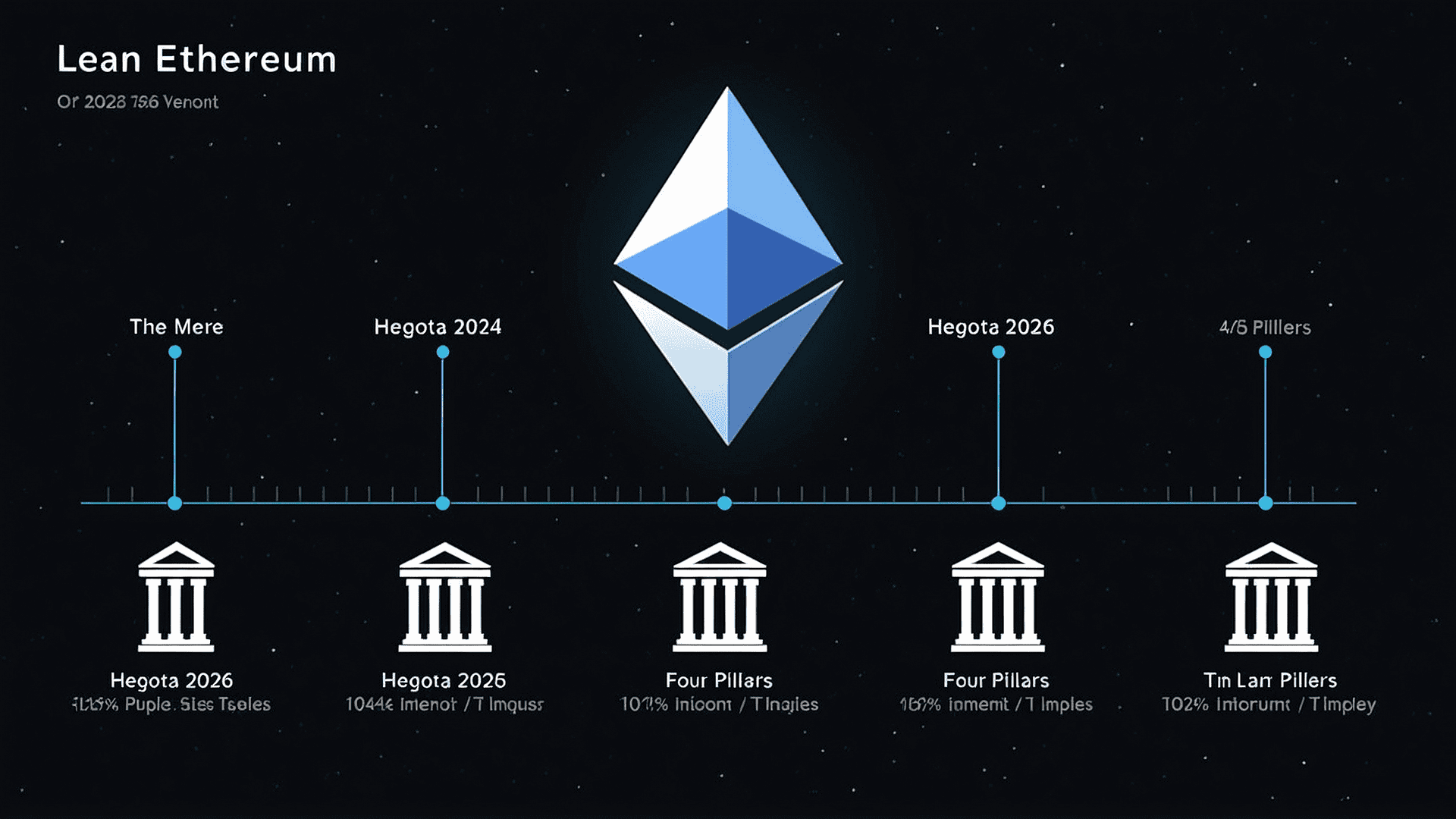
Lean Ethereum: Vitalik’s Blueprint to Rebuild the Ship While Sailing
Last updated on July 18th, 2026 at 09:23 am
Ethereum is preparing for a transformation, but this time it’s not a single event like the Merge.
Co-founder Vitalik Buterin has unveiled “Lean Ethereum,” a sweeping, multi-year roadmap to fundamentally rebuild the network’s core architecture.
This isn’t about incremental tweaks… it’s a comprehensive modernization effort designed to address Ethereum’s most pressing challenges… high costs… scalability… and looming security threats… before they become critical.
It’s a plan to rebuild the ship while it’s still sailing, ensuring it’s ready for the next decade of adoption.
A New Storage Layer

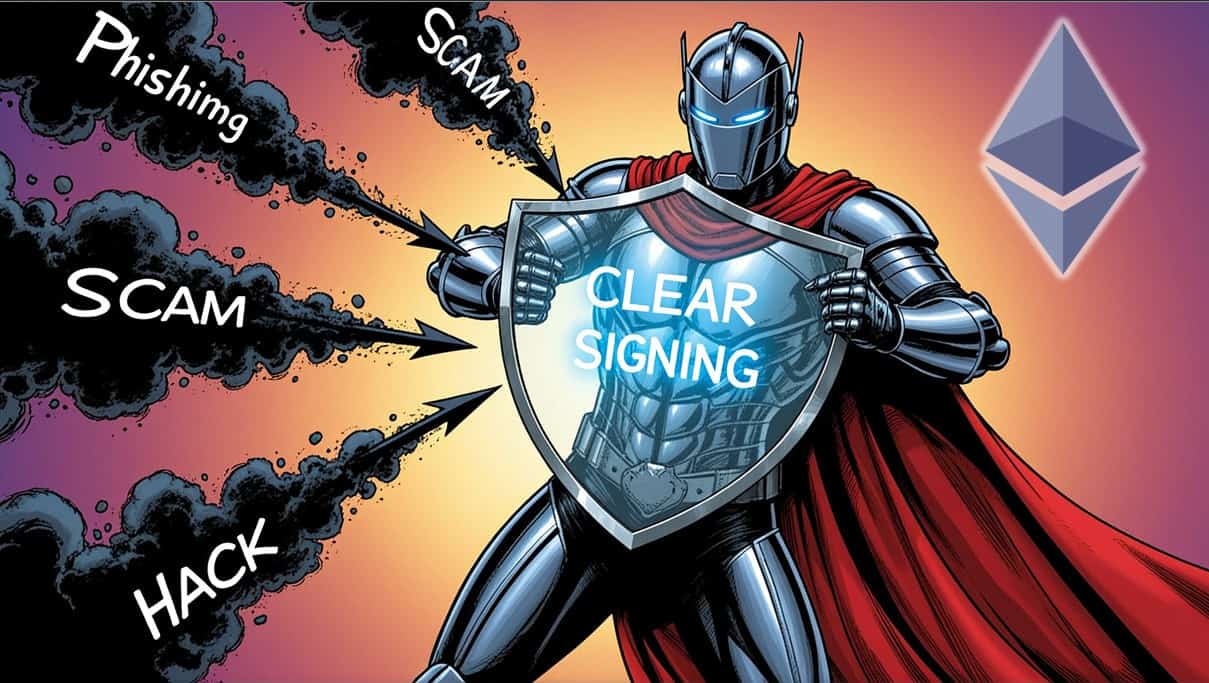
While the recent Ethereum upgrade to end blind singing was significant… this next one may be the chain’s most important one yet…
There are many parts to this upgrade outline… the most disruptive and immediate goal of the Lean Ethereum plan is a complete overhaul of its data storage architecture.
Buterin has identified the current model as a bottleneck… not designed for the sheer volume of activity the network now supports… this has been an issue plaguing Ethereum since its inception.
The proposed solution is to introduce a new, lower-cost storage tier that will run alongside the existing structure.
This new layer will be designed to handle the vast majority of on-chain activity, including most tokens, NFTs, and standard DeFi applications.
While developers won’t be forced to migrate… the economic incentive will be powerful to do so.
Applications optimized for this new storage model will see their operational costs drop significantly, a change Buterin estimates could lead to a tenfold reduction in fees for the average user.
The Four-Pillar Roadmap
As Ethereum is already a working blockchain… housing the majority of the DeFi space… a long-term roadmap has been proposed.
Buterin is framing this as the network’s “third major evolution” and its “biggest rebuild since the Merge.”
This isn’t a sudden overhaul… it’s a methodical, three-to-four-year phased rollout.
The final major upgrade before this Lean era formally begins is the “Hegota” upgrade, currently targeted for the second half of 2026.
The entire transformation is built around four core pillars, each targeting a fundamental part of the network’s architecture… Validation… Cryptography… Finality… and State Storage.
The first pillar involves implementing Verkle trees to reduce the data burden on validators, making it easier for more people to run a node and further decentralizing the network.
Making Ethereum Lighter
Imagine you’re trying to prove you own a specific house in a massive city, but you don’t want to carry the entire city’s property registry with you.
The current system, called a Merkle tree, is like having to bring a copy of every single property record on your street just to verify yours… it works… but it’s a lot of paperwork.
A Verkle tree is like a magical property deed… instead of carrying all that paperwork, your deed contains a tiny, unique cryptographic signature, or proof… you can show this single proof to a city official, and they can instantly confirm you own the house without needing to see any other records.
For Ethereum, this means a light node (a computer verifying the network) no longer needs to download and store the entire blockchain’s history.
It only needs this small proof to verify transactions, making it exponentially easier and more efficient to run a node, which boosts the entire network’s security and decentralization.
The Push for Quantum Resistance
One of the most important conversations of the day is the talk of Quantum Computing, and the threat is posed against our current cryptographic methods.
This makes Cryptography arguably the most important part of this upgrade.
The Lean Ethereum plan now treats the quantum computing threat as urgent… not theoretical.
It proposes replacing every quantum-vulnerable part of the protocol with quantum-safe alternatives, including the data storage layer that Layer 2 rollups depend on for their security.
This will be achieved in part through the integration of recursive STARKs, cryptographic proofs that also contribute to better scalability.
Proofs of Proofs

So what exactly are recursive STARKs?
Let’s use an example…
Think of a legal case where you have thousands of individual receipts to prove a financial claim.
A regular STARK (Scalable Transparent Argument of Knowledge) is like a highly credible auditor who can verify all 1,000 receipts and then issue a single, powerful certificate of authenticity that proves every single one is legitimate.
This saves a massive amount of time and space.
Now, imagine a Recursive STARK… this is when you take that auditor’s certificate of authenticity and feed it into an even higher-level auditing process.
This new auditor doesn’t look at the original receipts… they only verify the first auditor’s work and then issue their own… even more powerful certificate.
You could then repeat this process, creating proofs of proofs.
For Ethereum, this is a game-changer… it allows Layer 2 networks to compress millions of transactions into a single, tiny proof… and then allows the main Ethereum chain to verify that one proof almost instantly.
This creates a cascade of efficiency, enabling massive scalability and… forms the basis for the quantum-resistant cryptography that the “Lean Ethereum” vision depends on.
This move signals a major philosophical shift: securing the network against future threats is now a primary, non-negotiable objective of the core development roadmap.
You can read more about the quantum threat here.
The Future is Not the EVM
The most radical long-term change is proposed for the State Storage & EVM pillar.
To solve the high costs of generating proofs, Buterin proposes eventually moving beyond the current Ethereum Virtual Machine (EVM).
He has cited RISC-V and leanISA as leading candidates for a new, more proof-friendly core engine.
The vision is for this new engine to become the core protocol itself, with the EVM acting as a translation layer to ensure existing smart contracts continue to run without disruption.
This is a fundamental architectural change, designed to make the network inherently more efficient and scalable from the ground up.
Foundation for the Next Decade
Ultimately, Vitalik Buterin’s “Lean Ethereum” is a bold, necessary, and long-term vision for the network’s survival and dominance.
It’s a clear signal that the developers are focused not on short-term price pumps, but on building a robust, scalable, and secure foundation for the future.
While some in the community argue the three-to-four-year timeline is too slow, the plan itself is a testament to Ethereum’s commitment to solving the hard problems.
For users and developers, it means that while the journey will be gradual… the destination promises a network that is cheaper, faster, and ready for the quantum age.
Listen To A Discussion Of This Upgrade On This Episode of Matrix Money
Disclaimer
The information provided here is for INFORMATIONAL & EDUCATIONAL PURPOSES ONLY!
View our complete disclaimer on our Disclaimer Page