Illusion of Safety: How MetaMask Handed the Keys to North Korea
Last updated on August 8th, 2026 at 06:03 pm
You lock your doors…. you check your locks twice… you keep your valuables in a safe…
But what if the threat wasn’t a break-in, but someone who was handed a key?
In April 2026, the crypto world was forced to confront this exact question.
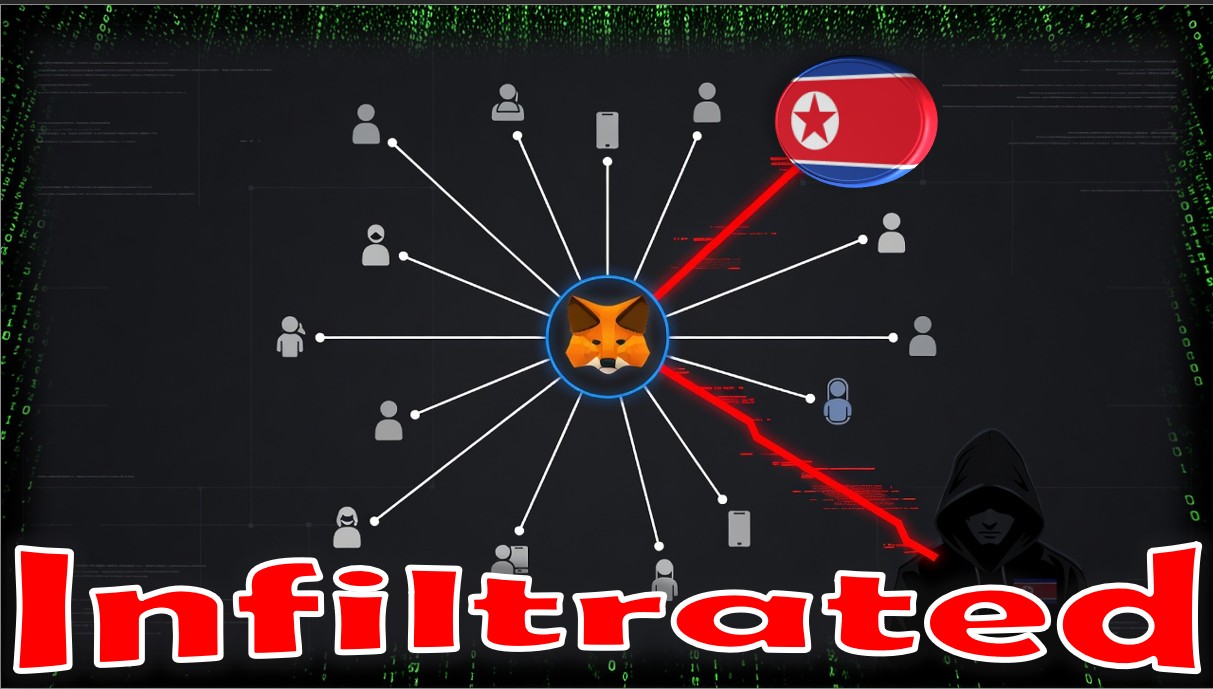
Consensys, the company behind the ubiquitous MetaMask wallet, revealed that a contractor later identified as being linked to North Korea had lived inside its codebase for a month.
This wasn’t a hack in the traditional sense… it was an infiltration.
The story of how they got in, what they had access to, and how they were caught is a chilling reminder that the biggest threats are often the ones we invite in ourselves.
Quiet Infiltration
The breach began like any other standard business operation.
On March 9, 2026, Consensys brought on a new contractor through a reputable third-party provider to work on the MetaMask codebase.
Operating under the alias “Tyler Knapp,” the individual appeared legitimate and was assigned to work on some of the wallet’s most sensitive areas.
For a month, this contractor had access to the code for the MetaMask mobile application and, critically, the code that connects the wallet to external fiat payment providers.
This wasn’t just a peripheral view… it was a seat at the main table… with the ability to see and alter the fundamental infrastructure that millions of users trust with their assets every day.
The Internal Alarm
The infiltration was not stopped by an external tip-off or a user report… it was discovered through Consensys’s own internal monitoring systems.
While the exact trigger has not been fully disclosed, reports suggest an internal alert was likely raised by abnormal network activity patterns… behavior that didn’t fit the profile of a typical developer.
Once the flag was raised, the company’s general counsel, Matt Corva, acted immediately.
The contractor’s access was terminated, all product releases were halted… and a full-blown internal and external investigation was launched, which included notifying law enforcement.
The infiltration was over, but the damage assessment had just begun.
The Breach Aftermath
In a follow-up statement, Consensys confirmed what every user was praying for… their investigation found no evidence of malicious code being deployed… no misappropriation of user assets… and no impact to the safety or security of the platform.
However, in my opinion… to focus only on the lack of theft is to miss the terrifying point completely!
This was a catastrophic failure of operational security.

The incident proved that a hostile nation-state actor, linked to the infamous Lazarus Group… known for stealing billions in crypto… could successfully embed itself into the most trusted software in the industry for a month.
North Korea, and the Lazarus Group have been so pervasive in hacking platforms in the crypto space, that they were the topic of conversation during a recent G7 meeting.
During this meeting the G7 put out a statement expressing “deep concern” regarding these types of bad actors.
Ultimately, the potential for damage was immense, and the fact that it didn’t happen was more a matter of luck and timing than of robust defenses.
Supply Chain Battlefield
As you might imagine, this event is not just a story about MetaMask… it’s a stark warning for the entire technology industry as a whole.
It proves that the most significant vulnerabilities are no longer just in the code itself, but in the human and procedural processes around it.
Recent industry data indicates that operational compromises, like insider threats from contractors or employees, account for an estimated 76% of all stolen crypto value.
The supply chain… network of third-party vendors… freelance platforms… and contracted developers… has become the primary battlefield for cyber warfare.
An attacker no longer needs to breach a company’s formidable firewall… they just need to create a convincing profile and get hired through a third party.
Consensys has since stated it will apply its rigorous direct-employee screening standards to all contractors, but this incident has permanently shattered the illusion that vendor management is a secondary concern.
The Illusion of Safety
The infiltration of MetaMask was a wake-up call.
The fact that no user funds were lost is a testament to Consensys’s internal monitoring, but it doesn’t erase the fact that the breach was allowed to happen in the first place.
This incident should force every user and every company to ask uncomfortable questions about who they trust.
In the world of digital assets, security is not just about strong cryptography… it’s about having zero trust in the humans who write the code and manage the access.
Watch The Discussion of This MetaMask Infiltration on Matrix Money
Disclaimer
The information provided here is for INFORMATIONAL & EDUCATIONAL PURPOSES ONLY!
View our complete disclaimer on our Disclaimer Page